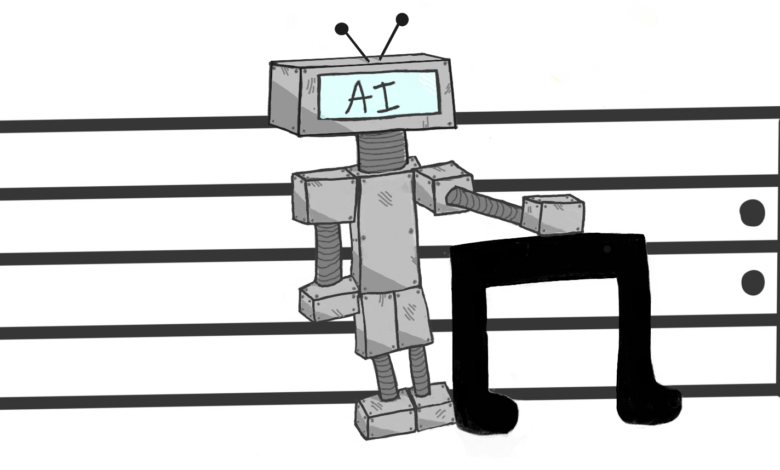
In 2025, the AI music market reached an all-time high of $6.65 billion dollars (Dyanomi, 2026). At the same time, nearly 90% of surveyed musicians say they have used AI in their music production process somewhere along the way. Known artists such as Paul McCartney, the renowned keyboardist and bassist of the Beatles, have been known to use AI in their process to create new melodies or sounds that go beyond human composition skills.
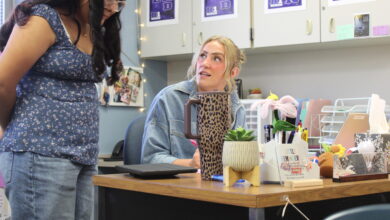
Band Director Shannon Curtis also teaches music production class. He is a strong believer in humans creating music independently.
“A lot of people make music for themselves,” Curtis said. “So I don’t think they’ll ever go down the AI road because they’re playing guitar and singing and writing lyrics to express their own existence and their own experience.”
While AI has been becoming more of a threat in the classroom, Curtis doesn’t think making authentic music will ever go away.
Shannon Curtis Band DirectorI don't think they'll ever go down the AI road because they're playing guitar and singing and writing lyrics to express their own existence and their own experience.
According to a 2024 Harvard Medicine publication, music affects our autonomic nervous system (ANS) by giving us reactions to new and important sounds, such as a catchy song or crescendo in a movie. It can build tension and spike our heart rate in intense scenes. Music also affects nearly every section of the human brain. Namely the limbic system, which controls emotional responses; therefore explaining how our moods can be changed depending on the type of music listened to (Eck, 2024).
AI music is said by many to lack “soul”, yet it is able to trigger larger responses in human minds because the emotional value is much harder to find. Researchers continue to discover how this type of music is really changing how we listen.
Whether we like it or not, AI music is quickly on the rise. Though it is still easy to pick out of human-made melodies, it will continue to get more difficult as advancements are made in generative technology.
Sources:
Dynamoi. (2026, January 12). AI Music Statistics: $6.65B Market Size [2026]. Dynamoi. https://dynamoi.com/learn/ai-music-distribution/ai-music-statistics-2026
Eck, A. (2024, March). How Music Resonates in the Brain. Magazine.Hms.Harvard.Edu; Harvard Medicine. https://magazine.hms.harvard.edu/articles/how-music-resonates-brain