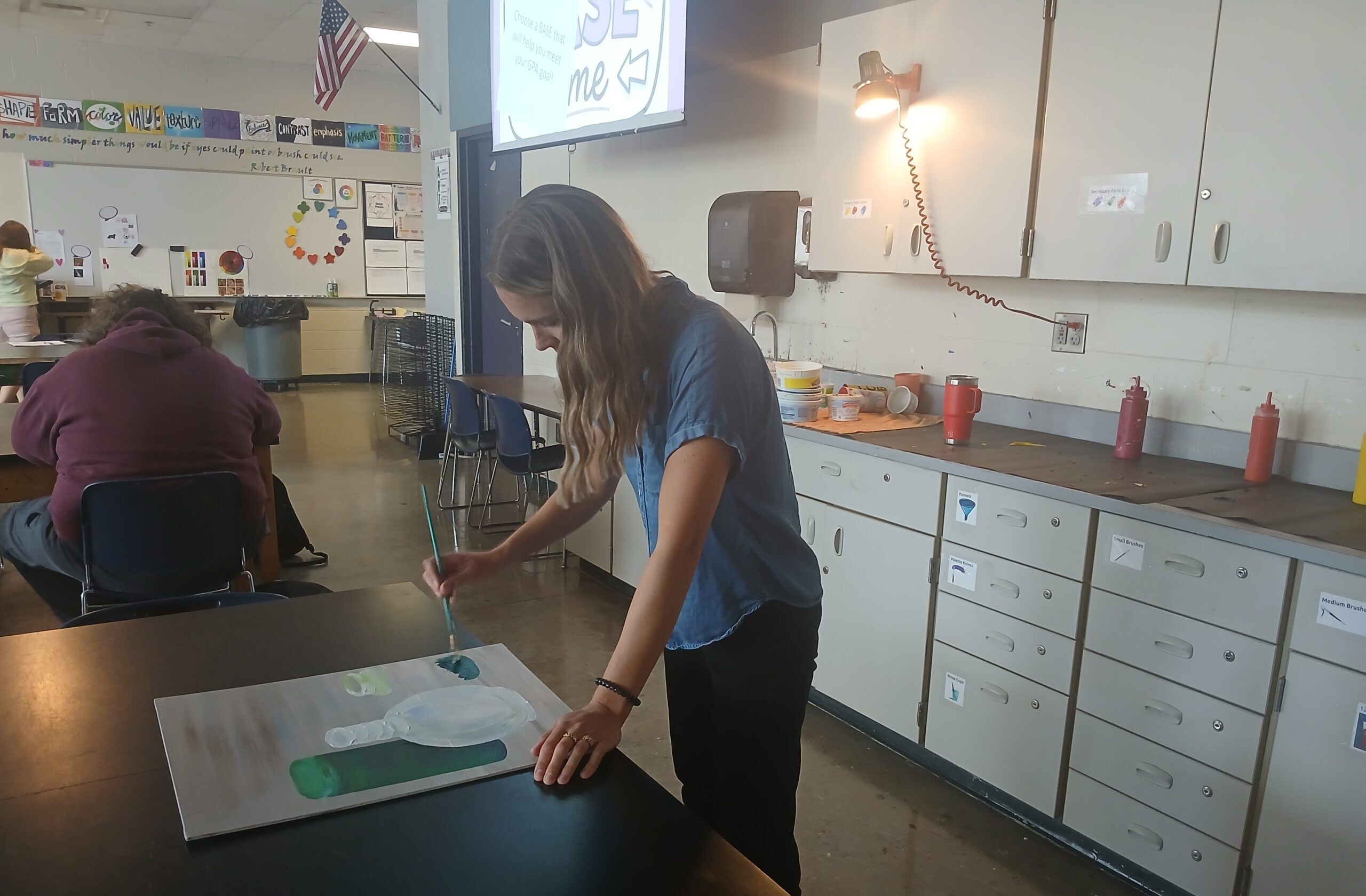
In her new, calm art room, Jillian Post is starting over from ground zero. After she’s spent years teaching at the middle school – where she already had all her projects and lessons planned out – she’s made the choice to leave it all behind and build a new foundation for older students.
Now she’s having to create brand new assignments, like fractured portraits and photo montages all while hoping her students will enjoy her lessons and find it fun to make art.
For Post, she wants her students to focus less on ‘cutesy’ art, and instead she wants students to consider their futures while creating. She hopes that many students will embrace their creativity and discover that art can be a serious part in their lives, even if they’ve never considered themselves as artists before.
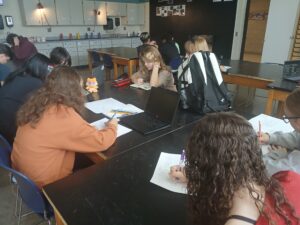
Post especially enjoys the moments when she sees her students realize that they love the creation of art.
“When that lightbulb moment happens, of ‘I can do this and I enjoy it,’” Post said, “that’s rewarding, I like that.”
Post hopes that in her class, students who haven’t ever thought of themselves as artists will realize they have a creative side and consider continuing art into college.
One of the major differences between middle school art and high school is the consideration that high school students put into their art.
“Its different, in that at the high school level, kids are actually thinking about careers, and, ‘Do I want to do something with art or not?’” Post said. “And then it comes down to, are you going to go down this pathway of, ‘I’m there for enjoyment,’ – which is great – or ‘I’m going to go and do some of this in college.’”
Her realization of this has made her feel the need to offer the ‘right’ amount of teaching, so students can feel like they have everything they need to continue with art while in college.
She thinks the most important thing you learn in art is divergent thinking. With other classes, there is usually a correct and incorrect answer, however with art, there isn’t. She feels in other classes that there aren’t enough opportunities for kids to go in a different direction for their projects. She likes seeing the creativity students put into their projects and seeing the varying responses to the same project.
Post isn’t just assigning projects to students, she’s helping them find their creativity and put it to use long after they leave her classroom.