

Advisory’s Conflict With State Standards
Advisory is our way of implementing required Social Emotional Learning, so why is it so ineffective?

The Minnesota Department of Education defines Social Emotional Learning very clearly: “Social emotional learning (SEL) is broadly understood as a process through which people build awareness and skills in managing emotions, setting goals, establishing relationships, and making responsible decisions that support their success in school and in life.”
SEL emerged in 2014 with legislation that required schools to use evidence-based learning to reduce bullying and create a better overall school culture.
Minnesota state statutes (laws) require schools to include SEL within their curriculum, adding it to the standards schools must meet. According to the implementation guide from the Minnesota Department of Education, there are 5 goals or competencies to meet: Relationship Skills Competency, Self-Awareness Competency, Self-Management Competency, Social Awareness Competency, and Responsible Decision-Making Competency. Do any of these sound familiar yet?
The theory is that having competency in these skills will help us throughout life and in awkward social interactions. Furthermore, it is highly encouraged – and to some degree required – of schools to have some kind of social/virtue education, according to Minnesota state statute 121A.031 Subd. 5 , “Districts and schools are encouraged to provide developmentally appropriate programmatic instruction to help students identify, prevent, and reduce prohibited conduct;” and to “value diversity in school and society; develop and improve students’ knowledge and skills for solving problems, managing conflict, engaging in civil discourse, and recognizing, responding to and reporting prohibited conduct; and make effective prevention and intervention programs available to students. Districts and schools must establish strategies for creating a positive school climate and use evidence-based social-emotional learning to prevent and reduce discrimination and other improper conduct.”
This state statute aims to teach students the ability to recognize, respond to, and report “prohibited conduct” and to learn essential social skills they will need in everyday life. This is also the state’s way of saying it is the school and school districts’ responsibility to meet students where they are at in their growth areas, such as in their social, emotional, and virtuosic education, to prepare them for the real world.
This is the state’s purpose and mandate for what we call Advisory time.
In an interview about the purpose of advisory in Buffalo High School, Mr. Mischke stated “We want a ‘home space’ for a kid to have for four years of their high school life, we want them to be able to create a connection with an adult and create additional support for students as they walk through college and career readiness. In a school the size of ours, another set of eyes from an adult that you can rely on is a large goal. It’s so you have an adult you know that you can go to if you have a problem.”
Mr. Mischke stated there were two goals behind advisory at Buffalo High School. One, that 100% of students in Buffalo High School have an adult they feel comfortable going to, a point he has hammered home to every single one of us at Buffalo High School. And two, that we can learn to get along with people we don’t like or maybe don’t know.
Anyone who takes the time to consider this would agree.
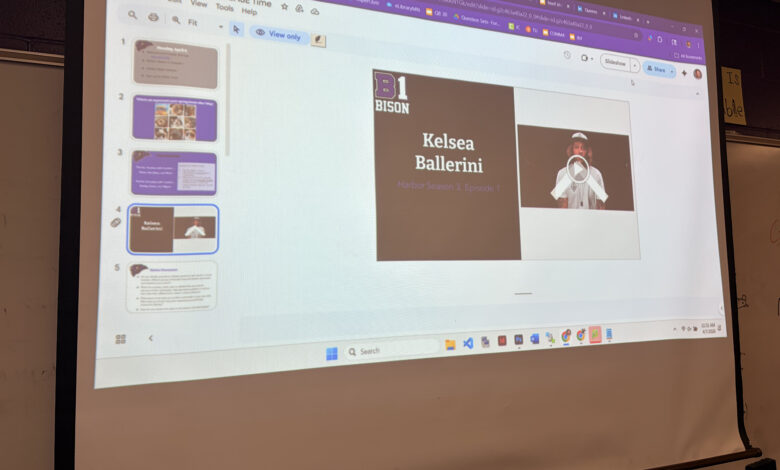
So why is there an issue with advisory and the execution? When asked, students said that classes either don’t do the slideshow and do something else, or when they are going through the slideshow, nobody is engaged or watching. Looking around during advisory, you can always see people on their computers and phones, or straight up taking naps. One thing mentioned by many students was the Harbor videos, their repetitiveness, and how unrelatable they truly are, even though they think they’re clever.
Clearly, there is an issue with how advisory is currently being taught, and it’s not because of the idea or lessons behind advisory. The real question is ‘what’ the problem is and ‘how’ we can fix it.
Remember the Harbor videos? Those videos come free with the caps and gowns for graduation from Jostens, and they meet the state requirements for SEL, without the school having to pay for it out of pocket.
One of the biggest issues with 121A.031 subd 5, is that it’s unfunded but puts all the responsibility on the school to teach essential social skills and provide safe spaces (and people) for students. It also puts people from all different kinds of backgrounds together and expects them to receive the lesson the same way. So how can we fix it?
No matter what you believe the issue with advisory is, there are two things you can do to make it better. Try to engage yourself! Be the first to participate in discussions and engage with the slides, or maybe try answering just one question for your advisory teacher. Connect with people in your advisory more; even if you have never had a conversation, it’s okay to disagree. Just Talk.
The second option is to advocate for change in how we approach advisory. Approach the goals the school and state have for advisory more directly through things like current events and discussions about that, or including more games and tailoring the curriculum toward how students learn today versus in the past. One way you can do this is to talk to your counselor, principal, or even your advisor and make serious suggestions on some more engaging ways we can learn these materials.
Ultimately, with all that goes on in the world and all that we just learned, connecting and discussing with others to understand is the goal. To create real, meaningful connections– even with unfunded state mandates. So how will you create an advisory space you can be kind in? A space you can be proud of? A space to show what you are driven by… To be a Leader.